2026 Guide: Sustainable Fabric Certifications for U.S. Consumers
Advertisements

With the “greenwashing” landscape evolving, U.S. consumers need more than just a label to verify ethical claims.
This 2026 update prioritizes insider knowledge on which fabric certifications actually meet new federal standards, helping you make informed, values-driven choices in the apparel sector.
The Rising Importance of Sustainable Fabric Certifications
The demand for sustainable fashion is growing exponentially, driven by heightened environmental awareness and ethical concerns among U.S. consumers.
As a result, the market is flooded with products claiming to be ‘eco-friendly’ or ‘sustainable,’ often without verifiable proof.
This proliferation of claims makes it challenging for the average buyer to distinguish genuine efforts from greenwashing.
Reliable sustainable fabric certifications serve as a critical tool, offering third-party verification of a product’s environmental and social impact.
For 2026, the landscape of these certifications is becoming more rigorous and standardized, pushing brands towards greater transparency and accountability.
Consumers armed with this knowledge can exert significant influence over industry practices.
Understanding Key Certification Categories
Sustainable fabric certifications generally fall into several categories: those focusing on organic content, chemical safety, fair labor practices, and overall environmental management.
Each category addresses different aspects of the supply chain, providing a comprehensive view of a product’s sustainability.
Some certifications cover the entire lifecycle of a garment, from fiber production to manufacturing processes, while others specialize in specific stages.
It is important for consumers to recognize these distinctions to understand what each label truly represents.
As part of The 2026 Guide to Sustainable Fabric Certifications: What Every U.S. Consumer Needs to Know Before Buying Clothes (INSIDER KNOWLEDGE), we highlight the most impactful and widely recognized certifications that consumers in the U.S. should prioritize.
Organic Content Certifications: GOTS and OCS
The Global Organic Textile Standard (GOTS) is arguably the most comprehensive certification for organic fibers, encompassing ecological and social criteria throughout the entire textile supply chain.
It ensures that textiles are truly organic, from harvesting of the raw materials through environmentally and socially responsible manufacturing, up to labeling.
The Organic Content Standard (OCS) verifies the presence and amount of organic material in a final product, but does not cover the processing steps beyond the raw material.
While less comprehensive than GOTS, OCS still provides a valuable assurance of organic content.
Consumers looking for genuinely organic clothing should prioritize GOTS-certified products, as they offer a higher level of assurance regarding both environmental and social standards in production.
OCS is a good starting point but lacks the holistic approach of GOTS.
Chemical Safety and Environmental Management: OEKO-TEX and Bluesign
OEKO-TEX Standard 100 is one of the world’s best-known labels for textiles tested for harmful substances.
It stands for customer confidence and high product safety, ensuring that every component, from thread to button, has been tested for harmful substances and is harmless for human health.
The Bluesign system goes further, focusing on minimizing environmental impact at every step of the textile production chain.
It evaluates chemicals, processes, products, and the entire production chain to ensure responsible resource use, minimal emissions, and consumer safety.
These certifications are crucial for health-conscious consumers and those concerned about the environmental footprint of textile dyes and finishes.
They represent a commitment to safer products and cleaner production methods, aligning with the principles of The 2026 Guide to Sustainable Fabric Certifications: What Every U.S. Consumer Needs to Know Before Buying Clothes (INSIDER KNOWLEDGE).
Social Responsibility and Fair Labor: Fair Trade and SA8000
Fair Trade certification primarily focuses on ensuring fair wages and safe working conditions for farmers and factory workers in developing countries.
It addresses issues such as child labor, forced labor, and discrimination, promoting equitable trading partnerships.
SA8000 is a global social accountability standard that encourages organizations to develop, maintain, and apply socially acceptable practices in the workplace.
It covers aspects like child labor, forced labor, health and safety, freedom of association, discrimination, and working hours.
For consumers concerned with the human aspect of fashion production, these certifications provide vital assurance.
They indicate that the clothing was made under conditions that respect human rights and provide fair compensation, reflecting a core tenet of The 2026 Guide to Sustainable Fabric Certifications: What Every U.S. Consumer Needs to Know Before Buying Clothes (INSIDER KNOWLEDGE).
Emerging Certifications and Future Trends for 2026

The landscape of sustainable fabric certifications is constantly evolving, with new standards emerging to address specific environmental challenges or technological advancements.
For 2026, we anticipate increased focus on circularity and regenerative agriculture.
Certifications like the Cradle to Cradle Certified product program are gaining traction, emphasizing products designed for circularity, meaning they can be safely recycled or composted.
Regenerative agriculture certifications, while still nascent, are expected to play a larger role in fiber sourcing.
Consumers should stay informed about these new developments, as they represent the cutting edge of textile sustainability.
These emerging standards will further refine how we define and measure truly sustainable fashion, as highlighted in The 2026 Guide to Sustainable Fabric Certifications: What Every U.S. Consumer Needs to Know Before Buying Clothes (INSIDER KNOWLEDGE).
How to Identify and Verify Certifications as a U.S. Consumer
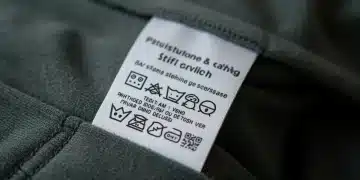
Identifying certified products typically involves looking for specific logos on clothing tags, product descriptions, or brand websites.
Many certifications provide databases or tools on their official websites where consumers can verify a brand’s or product’s certification status.
It’s crucial to be wary of generic claims like ‘eco-friendly’ without supporting certification. Always cross-reference claims with official certification bodies to ensure authenticity. A quick search can often reveal whether a brand’s claims are legitimate.
Developing this habit of verification empowers consumers to make truly impactful purchasing decisions, moving beyond marketing hype.
This proactive approach is fundamental to fully utilizing The 2026 Guide to Sustainable Fabric Certifications: What Every U.S. Consumer Needs to Know Before Buying Clothes (INSIDER KNOWLEDGE).
Challenges and Criticisms of Certifications
Despite their benefits, sustainable fabric certifications face challenges, including varying levels of rigor, potential for confusion due to multiple standards, and the cost burden on smaller brands.
Some critics argue that certifications can be seen as a barrier to entry for smaller, genuinely sustainable businesses.
There’s also the issue of ‘certification fatigue,’ where consumers become overwhelmed by the sheer number of labels, making it difficult to discern which ones are most meaningful. This complexity can inadvertently lead to inaction rather than informed choice.
However, these challenges do not negate the value of certifications; rather, they underscore the need for continuous improvement, harmonization, and clear communication.
The aim of The 2026 Guide to Sustainable Fabric Certifications: What Every U.S. Consumer Needs to Know Before Buying Clothes (INSIDER KNOWLEDGE) is to simplify this complexity for the U.S. consumer.
The Role of E-commerce and Digital Transparency
The rise of e-commerce has significantly impacted how consumers access information about sustainable products. Many online retailers now integrate certification details directly into product pages, enhancing digital transparency.
Platforms and brands are increasingly using digital passports or QR codes on garments, allowing consumers to trace the product’s journey and verify certifications instantly. This digital approach offers a new level of accountability and engagement.
As we move into 2026, digital transparency will become an even more critical component of the sustainable fashion ecosystem.
It empowers consumers with on-demand information, reinforcing the insights provided by The 2026 Guide to Sustainable Fabric Certifications: What Every U.S. Consumer Needs to Know Before Buying Clothes (INSIDER KNOWLEDGE).
Consumer Action and Industry Impact
Every purchase decision by a U.S. consumer holds power, influencing brands to adopt more sustainable practices. By choosing certified sustainable clothing, consumers send a clear signal to the market that environmental and social responsibility matters.
This collective consumer action drives innovation and encourages more brands to invest in ethical supply chains and eco-friendly materials. Your choices contribute directly to a more sustainable fashion industry.
Ultimately, the informed consumer is the catalyst for change, shaping the future of fashion.
This guide aims to equip you with the insider knowledge needed to be that catalyst, as outlined in The 2026 Guide to Sustainable Fabric Certifications: What Every U.S. Consumer Needs to Know Before Buying Clothes (INSIDER KNOWLEDGE).
| Key Point | Brief Description |
|---|---|
| Certification Purpose | Verify environmental and social claims in textile production. |
| Key Certifications | GOTS, OEKO-TEX, Bluesign, Fair Trade, SA8000 are prominent. |
| Consumer Action | Look for logos, verify online, and support certified brands. |
| Future Trends | Increased focus on circularity, regenerative agriculture, and digital transparency. |
Frequently Asked Questions About Sustainable Fabric Certifications
The primary benefit is third-party verification, which assures consumers that a product meets specific environmental and social standards. This helps combat greenwashing and ensures transparency in the supply chain, aligning with The 2026 Guide to Sustainable Fabric Certifications: What Every U.S. Consumer Needs to Know Before Buying Clothes (INSIDER KNOWLEDGE).
GOTS covers the entire textile supply chain, including ecological and social criteria, from raw material to finished product. OCS only verifies the organic content percentage in a product, without the comprehensive processing standards of GOTS.
No, not all claims are reliable. Many brands use vague terms without independent verification. It is crucial to look for reputable certifications like those highlighted in The 2026 Guide to Sustainable Fabric Certifications: What Every U.S. Consumer Needs to Know Before Buying Clothes (INSIDER KNOWLEDGE) to ensure authenticity and avoid greenwashing.
Fair Trade certification ensures fair wages, safe working conditions, and ethical treatment for workers in the textile supply chain. It addresses social responsibility, combating exploitation and promoting equitable trading practices in a critical sector.
Consumers can typically verify certifications by checking for official logos on product tags and then visiting the certification body’s website. Many provide searchable databases or QR codes for direct verification, a key aspect of The 2026 Guide to Sustainable Fabric Certifications: What Every U.S. Consumer Needs to Know Before Buying Clothes (INSIDER KNOWLEDGE).
Next Steps for Maximizing Your 2026 Retirement Contributions
The insights into these lesser-known tax advantages for maximizing your 2026 retirement contributions highlight the critical need for proactive and informed financial planning.
Understanding these strategies—such as leveraging the “Mega Backdoor Roth” or optimizing Health Savings Accounts (HSAs) for long-term growth—is the first step toward securing a more robust and tax-efficient retirement.
As the financial landscape evolves, staying abreast of legislative changes and economic shifts will be paramount.
Continuous review and adjustment of your retirement plan ensures it remains aligned with your goals and optimized for future conditions.
This includes rebalancing portfolios to account for inflation and ensuring your asset allocation reflects your timeline to retirement.
Engaging with a qualified financial advisor is highly recommended to tailor these strategies to your unique situation, ensuring compliance and maximizing the benefits of these powerful tools for maximizing your 2026 retirement contributions.
For more information on how sustainability and environmental standards are being integrated into industry certifications, you can explore the Sustainable Fabric Certification.